5 MAIN ADVANTAGES OF GROWING FOOD WITH AQUAPONICS:
1 SMALL AND CLOSED SPACES
Compared to growing food in the soil, much less physical space is required.
Indoor cultivation is also possible.
2 90% REDUCED WATER CONSUMPTION
Up to 90% less water is used in the aquaponic system.
3 FASTER GROWTH
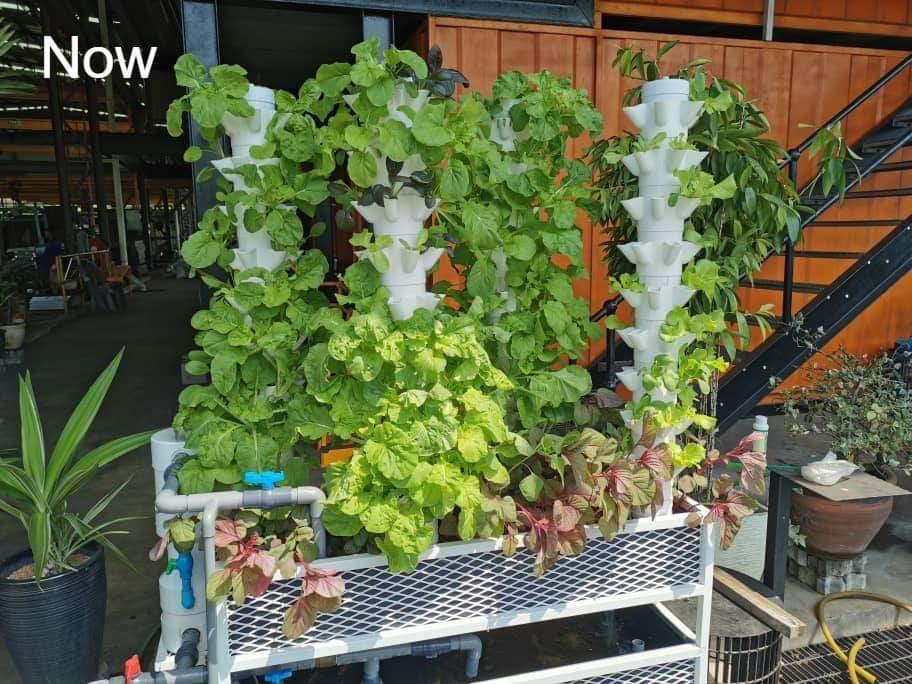
Food grows much faster in aquaponics compared to soil.
4 ORGANIC FOOD
Organic food without chemicals and pesticides, because the fish would die.
Food tastes better.
5 FISH
Fish is an additional product.
Aquaponics is a method of food production that combines the cultivation of fish with plants, without the use of soil, fertilizers, pesticides and chemicals. The method goes back a long way, to the time of the Aztecs.
Corn, beans and pumpkins were grown on kinampas or "floating gardens".
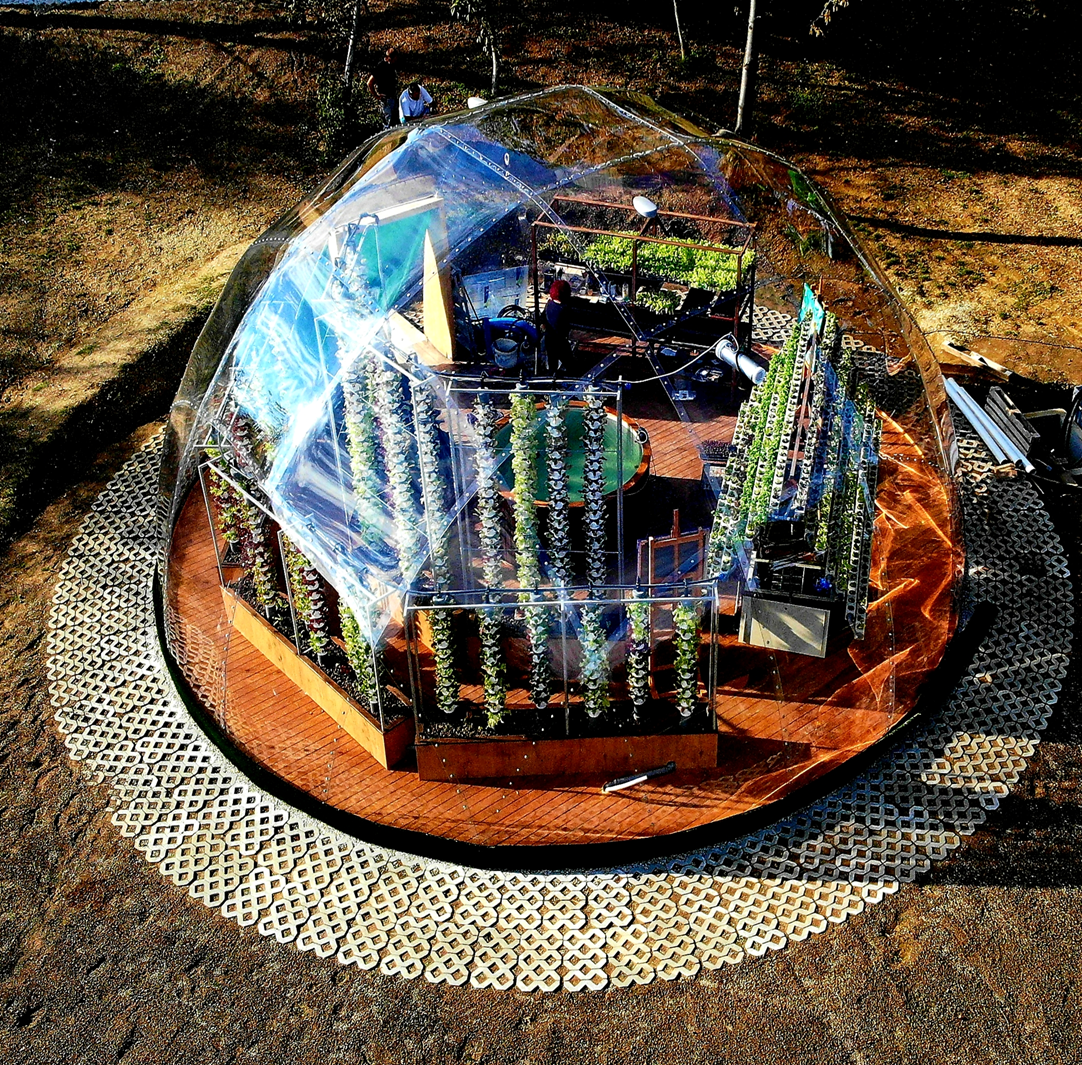
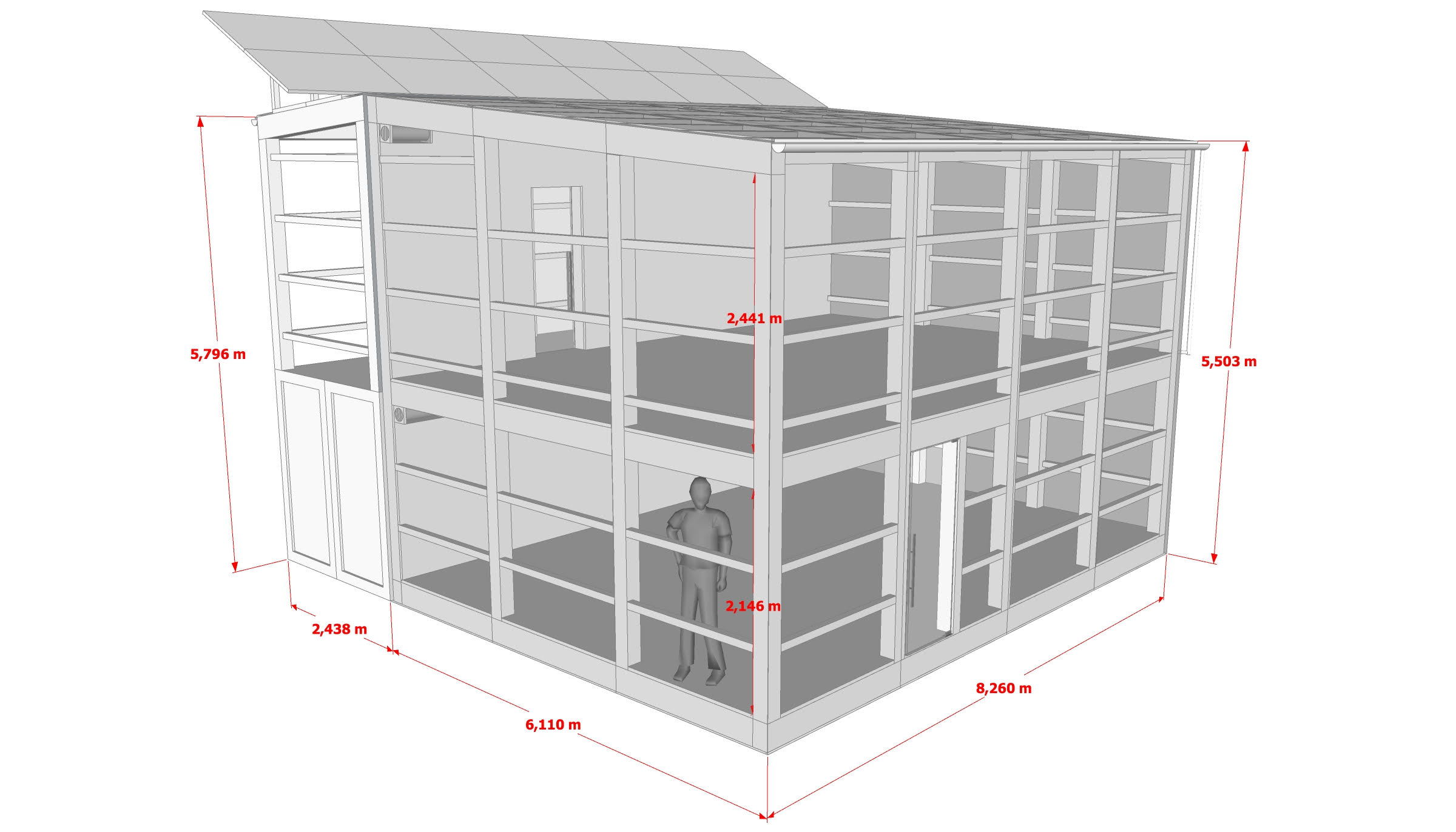
It is a smart greenhouse on 2 floors. It is designed to take advantage of unused urban space in city centers, residential areas, shopping centers,... for the organic production of high-quality, fresh vegetables and fish without the use of pesticides and artificial fertilizers.
It is an ideal solution for supplying schools, kindergartens, homes for the elderly, restaurants, hotels, spas,... with fresh vegetables, spices, fruit and fish.
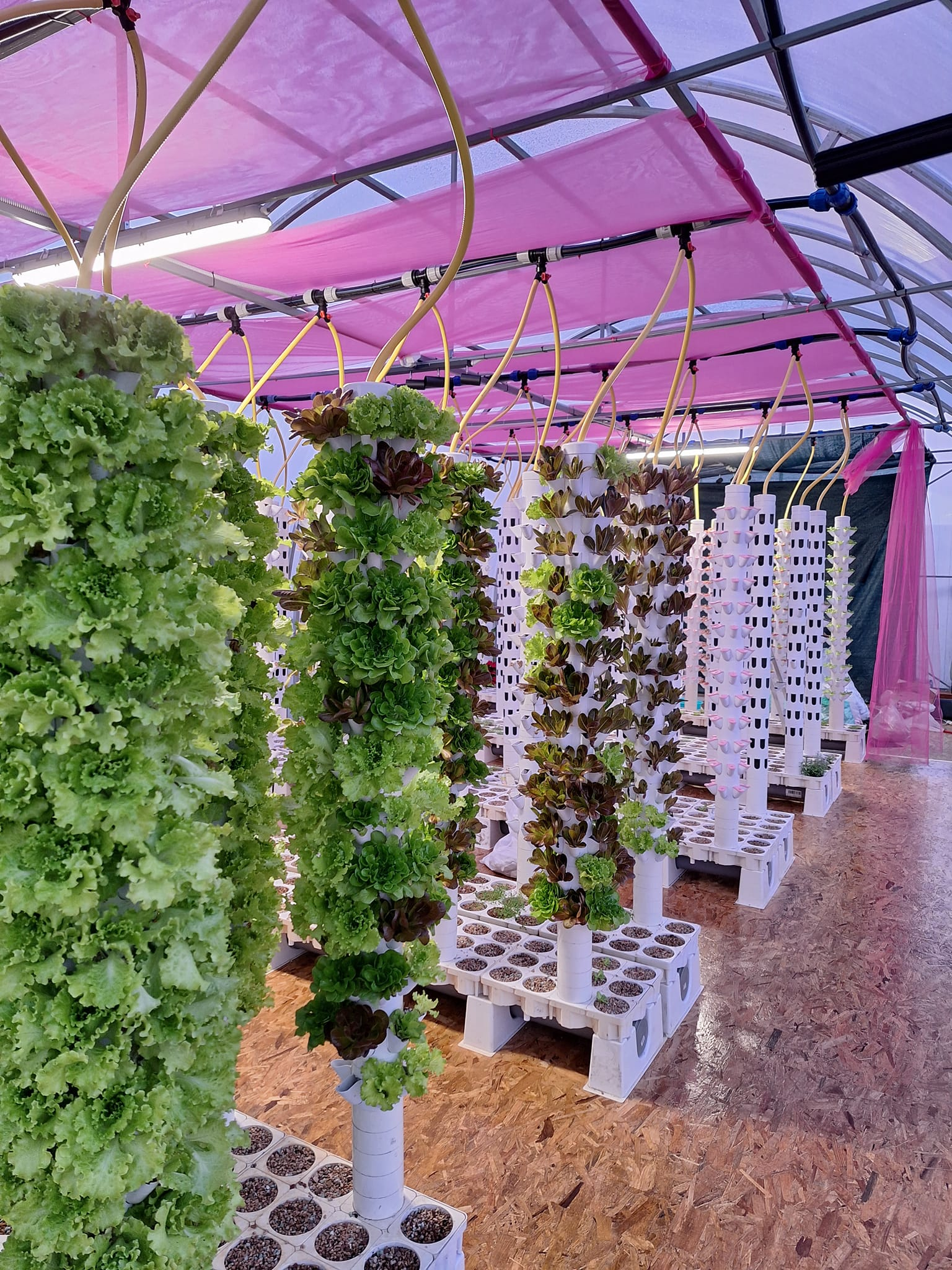
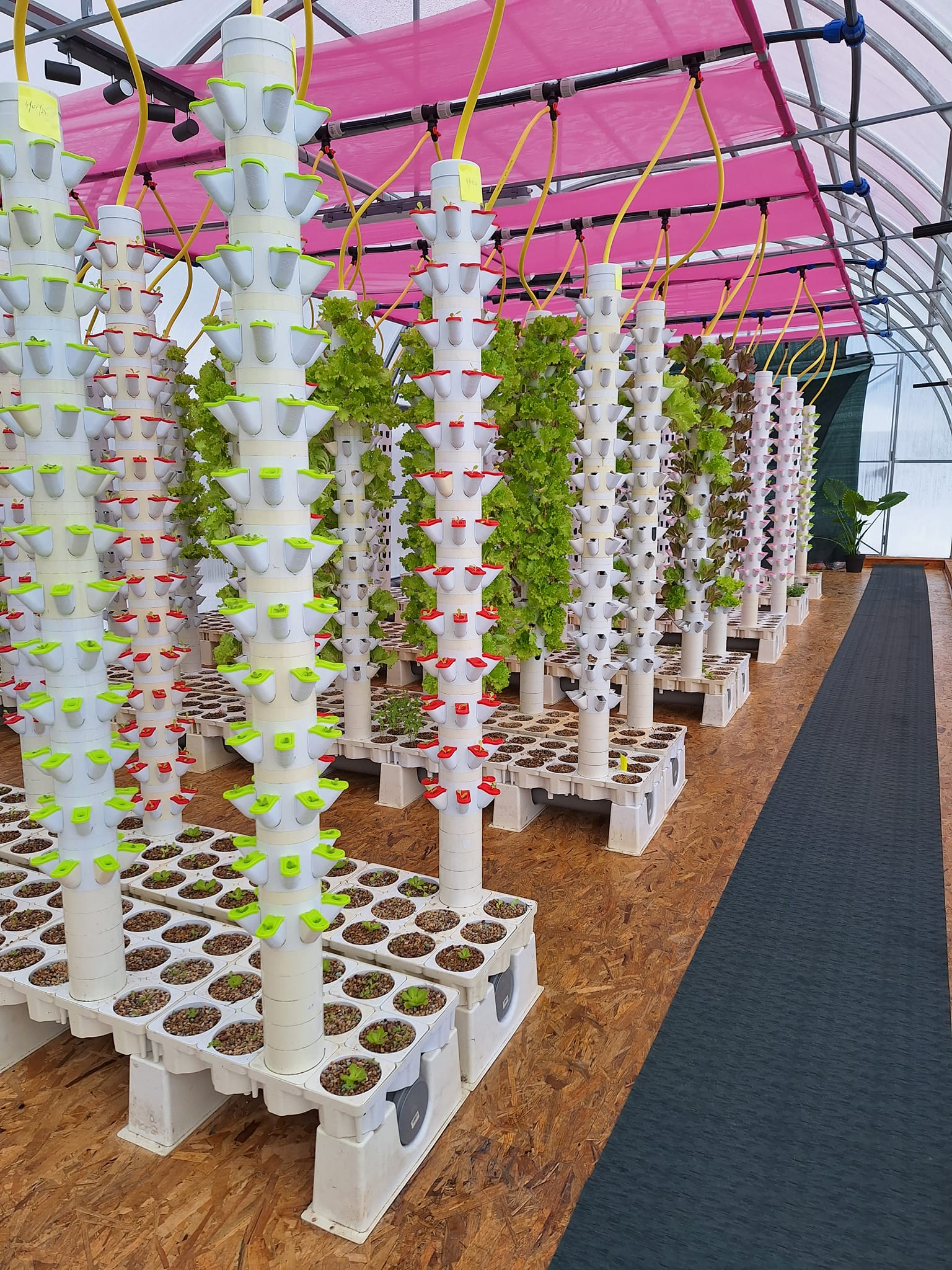
It is designed to create an economically sustainable business model that ensures efficient organic food production using renewable energy sources, green jobs and increased local economic activity. With this model, we can grow various vegetables, herbs, fruits and fish. By using the tower vertical Aquaponics system, we increase production per m2 of surface by more than 10 times.
It combines the latest and most innovative food production technologies using aquaponic systems.
In addition to its many eco-friendly features, it boasts an innovative and sustainable design, making it ideal for construction in busy urban locations, including decaying car parks and empty, unused spaces between residential buildings.
The greenhouse is designed to make the most of unused urban areas. At the same time, the design model provides a high degree of flexibility, mobility and potential scalability.
The greenhouse model can be integrated into larger community-led projects aimed at providing fresh vegetables, fruit and fish to schools, nursing homes and hospitals, local communities,...
In this case, the SATILU 2FAqF system could produce 40 tons and more of total yield per year.
The materials used will either be reused or intended for circulation within the production circle.
The unit is energy self-sufficient by using alternative sources of energy (sun, wind). Water use is partially or fully provided by rainwater harvesting.
With further development of the model, we will expand the concept for use in humanitarian crisis areas such as refugee camps and disaster shelters.
Floor plan
2x 50 m2
Construction
Heat-treated wood (steel construction, optional), mobile system
Facade
100% recycled polycarbonate 6 mm, UV protection on both sides, north wall made of sandwich panels with 35 mm insulation
Aquaponics equipment
150 crown towers, 92 growing places, 5-level LED Indoor system, 288 growing holes per floor, 2 fish 3m3 pools
Electricity
photovoltaic power station, wind power station – optional
The heating
IR panels, recovery system, passive heating
Cooling
shading, recuperation, system air conditioning
Ventilation
heat recovery ventilation units, three flow settings of low, medium and high with ventilation rates of 10/15/20 CFM or 9/18 /22 CFM
System for control and regulation of climate conditions
Smart Greenhouse climate system
Annual crop
Fish
1.5-2 tons of different types of fish per year.
Trout, Tilapia, Freshwater sea bass, Sturgeon, Salmon,...
Vegetables/Fruits
20-25 tons of various leafy vegetables per year (11 months). Various leafy vegetables, herbs, berries, medicinal plants, ...
Price, at the customer's request.




 .
. .
.